Part of our guide to pub marketing ideas
Live music pub promotion that sets clear expectations
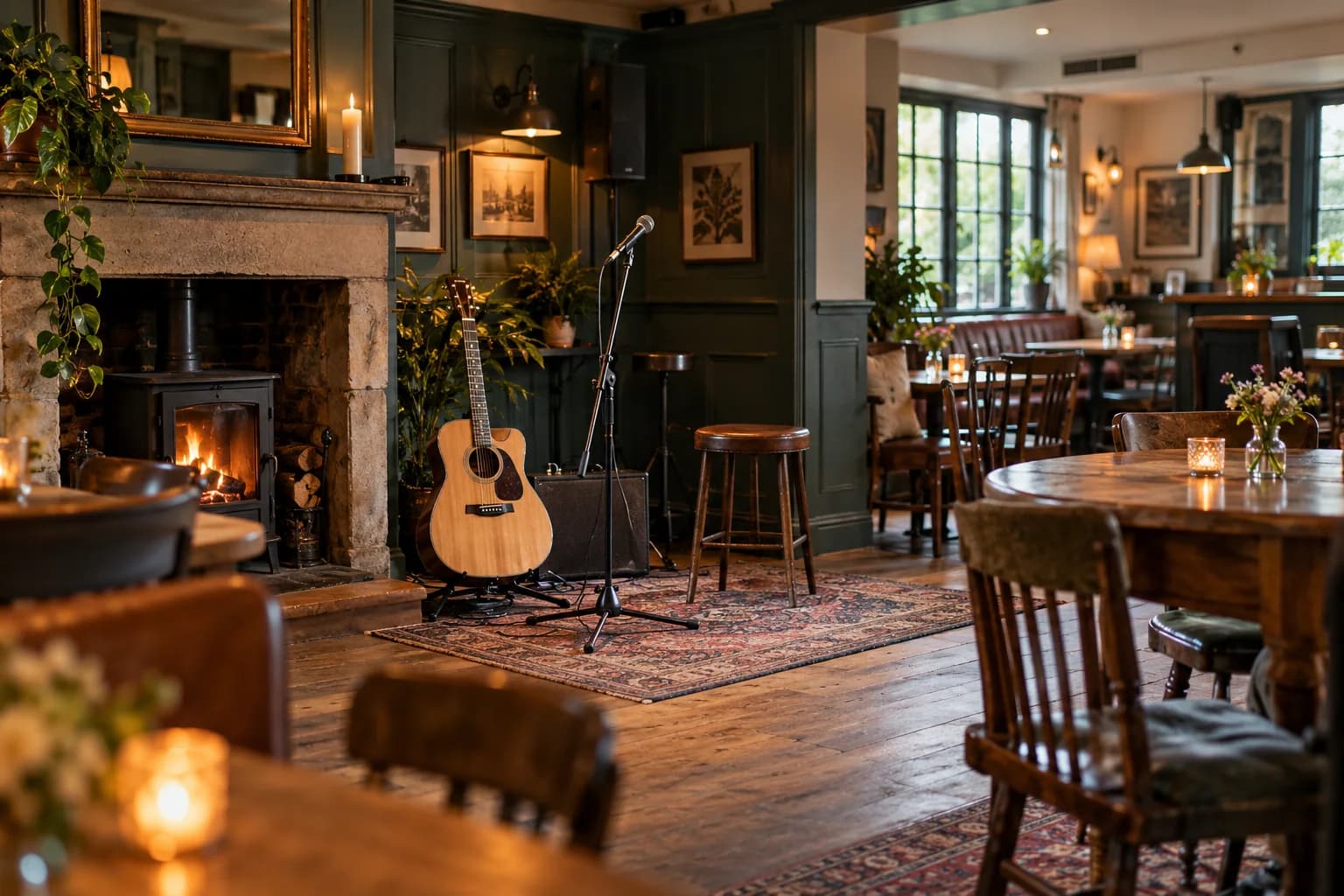
A customer coming for a quiet meal and someone arriving for a live set may want different evenings. Both can leave disappointed if the pub's promotion leaves the arrangements unclear.
Live music pub promotion should describe the event precisely enough for people to decide whether it suits them. Start with the format and the experience, then make the booking route obvious.
Explain the evening before promoting the performer
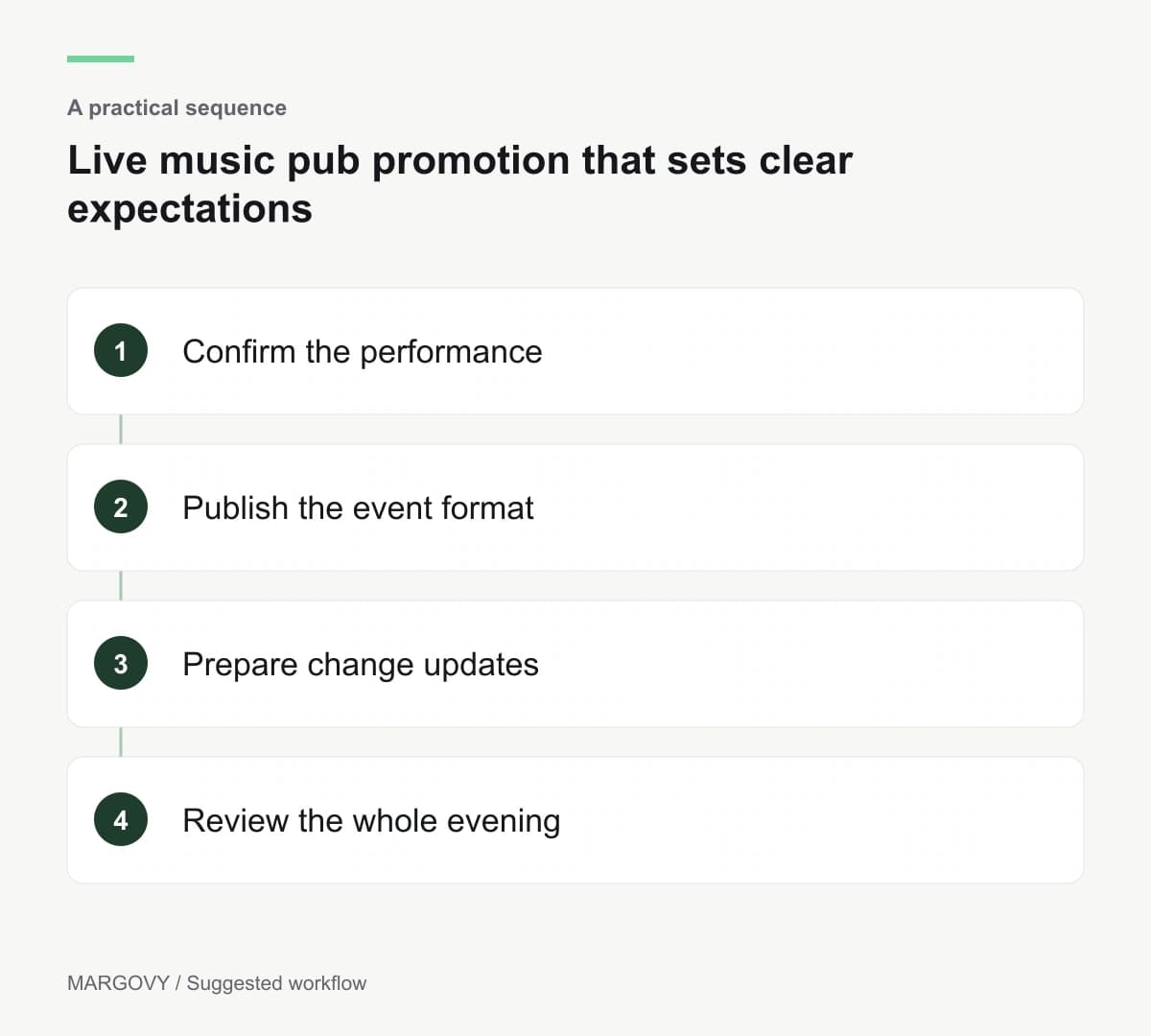
Include the confirmed date and performance time. Describe the music in plain terms and confirm whether the event is seated, standing or a mixture.
State any admission charge, booking requirement and relevant age restrictions. If food service differs from a normal evening, publish that too.
Check the artist's name and use photographs or promotional materials you have permission to share. Confirm the details with the performer before scheduling announcements.
A recurring event page should make the next date easy to find. Old line-ups need a clear archive label so they do not appear current.
Help existing guests discover the event
Someone visiting for lunch may be interested in the evening programme. Introduce it through your pub guest Wi-Fi page, linking directly to the event details.
Use accurate wording on the button. "Live music dates" is appropriate for a programme; "Book Friday's performance" should lead to that specific event.
An ongoing follow-up email can link opted-in guests to a maintained events page. It should not promise a performer whose booking has ended.
Margovy's scheduled welcome-page content can keep event information visible at relevant times, provided someone updates the destination when plans change.
Prepare for changes and enquiries
Agree who updates the website if the performer cancels or the time changes. Staff answering the phone should know which page holds the current information.
For a ticketed event, use your ticketing records for direct booking communications. Guest Wi-Fi sign-ins will not identify everyone who bought a ticket.
Check the arrival arrangements too. Customers need to know where to check in and whether a dinner reservation also reserves a place for the performance.
Review the complete evening
Record attendance and event costs alongside food and drink sales. Include any additional staffing or equipment costs.
Read feedback from both the music audience and other guests. A busy event may still disrupt the experience you want to offer elsewhere in the pub.
Compare the result with your original aim: introducing a new audience, supporting a quiet session or serving existing regulars.
Discuss your venue with Margovy if you want guest Wi-Fi to make the programme easier to discover during ordinary visits.