Part of our guide to hotel marketing ideas
Marketing a hotel restaurant to local diners
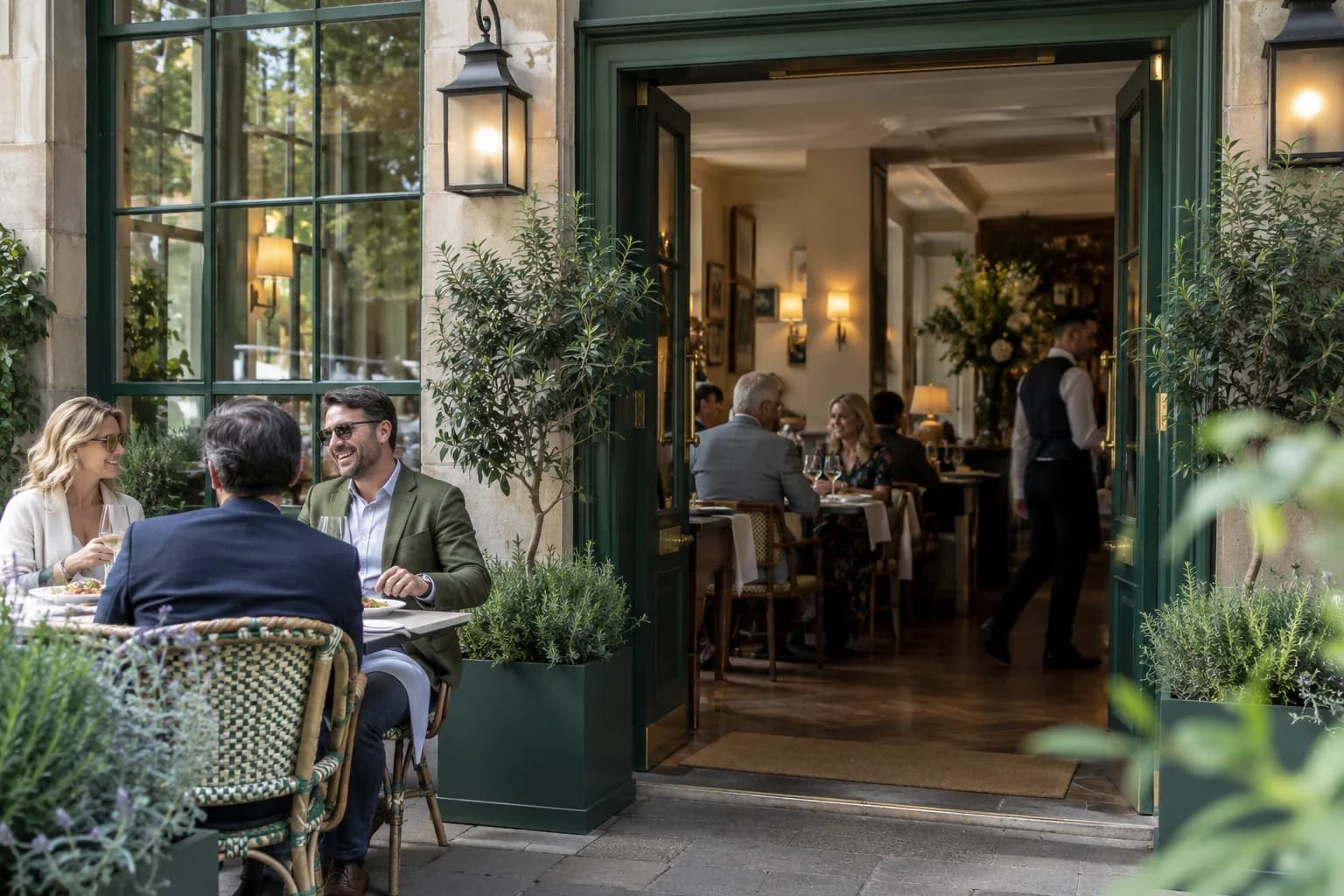
A hotel restaurant may welcome local diners while its website gives the impression that everything is intended for overnight guests.
Hotel restaurant marketing needs to resolve that uncertainty early. People should be able to tell whether they can book a meal without a room reservation.
Start with the dining page and the journey from the street to the table.
State who can book
If the restaurant is open to non-residents, say so clearly. Explain the available services and any occasions reserved for hotel guests.
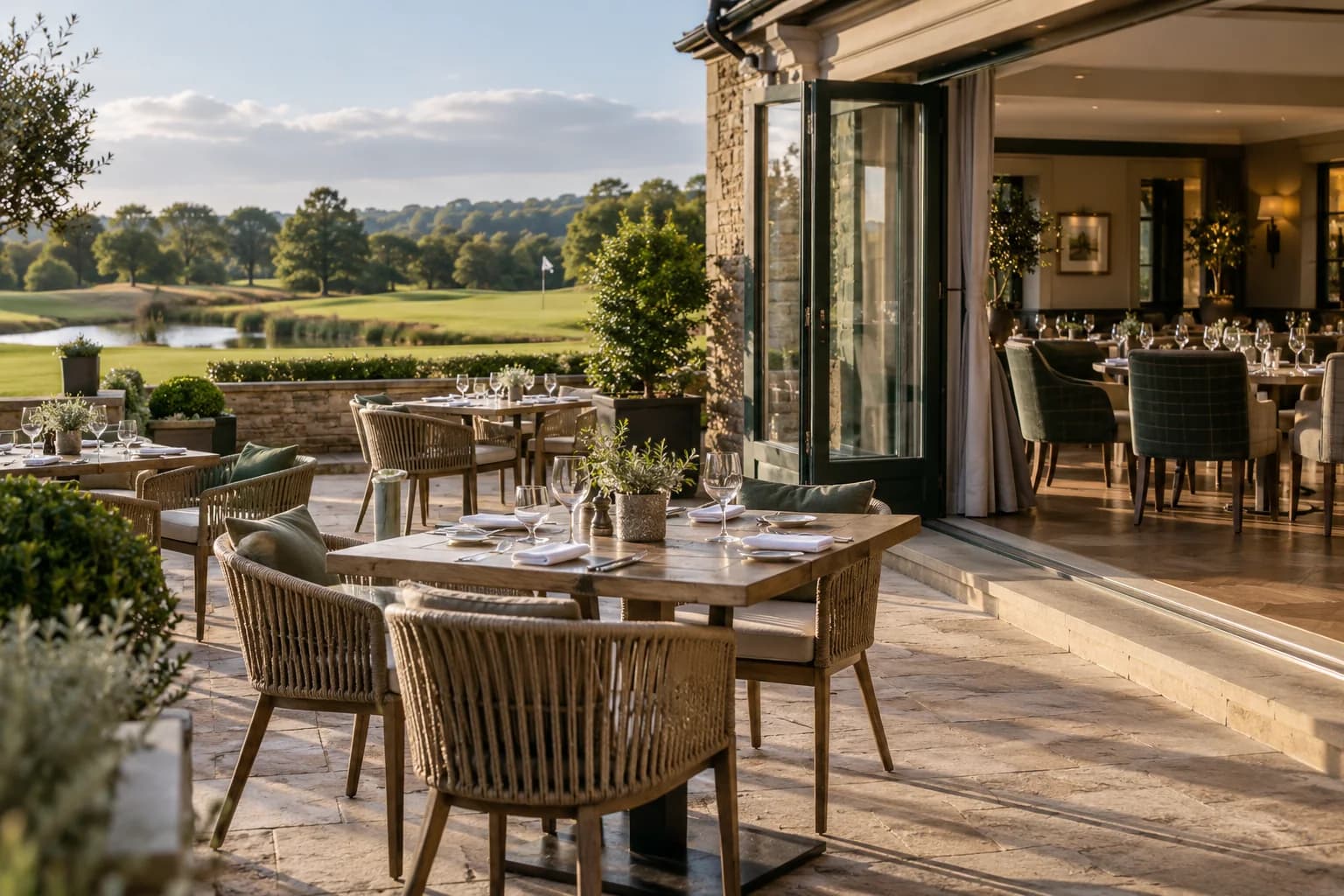
Publish the correct entrance and relevant parking information. A local customer should not have to arrive at bedroom reception to discover a different route.
Show menus with current service times. Keep the restaurant reservation link separate from room booking.
Where a dining package includes an overnight stay, label it distinctly. Visitors should not need to compare several packages to find an ordinary lunch reservation.
Give the restaurant its own occasion
Choose a dining experience that suits local demand and your service capacity. That could be lunch or a regular evening menu.
Describe the food and setting accurately. Avoid relying on hotel facilities that a dining customer cannot use.
Introduce the service to people already visiting the property for meetings or events. They may not know the restaurant welcomes a separate reservation.
Your hotel guest Wi-Fi page can provide a restaurant link alongside stay information. Keep the label broad enough for both residents and day visitors.
Write follow-ups without assuming an overnight stay
A person who signs into hotel Wi-Fi might be attending a meeting or visiting the restaurant. The connection alone does not prove they stayed in a room.
For eligible marketing recipients, "Thank you for visiting" is safer than "We hope you enjoyed your stay" when you do not know.
Link to the dining page and let the guest choose whether it is relevant. Do not invent resident or non-resident audiences from incomplete data.
Margovy's customer-list and follow-up features explain the information available for those decisions.
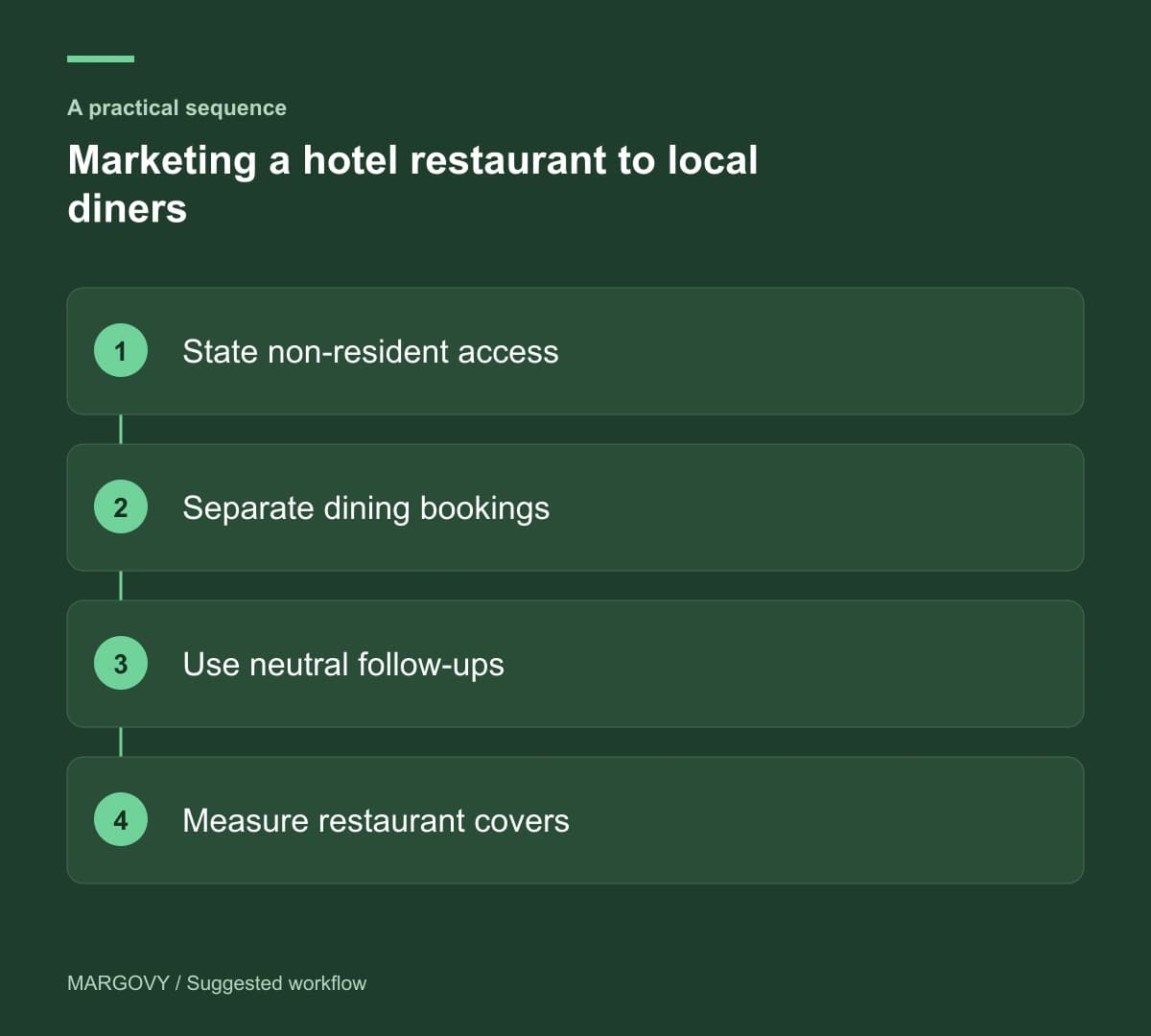
Measure dining activity independently
Use restaurant reservations and till records to assess the promotion. Room bookings and Wi-Fi connections cannot substitute for dining covers.
Ask the team whether customers understood access and parking. Repeated questions show what the page needs to explain better.
If local enquiries are increasing but reservations are not, examine menu clarity and available times before changing the audience.
Compare Margovy's plans if you want to make dining information part of the property's guest Wi-Fi and follow-up journey.