Part of our guide to hotel marketing ideas
Hotel email frequency that respects different guests

A hotel guest may receive a booking confirmation, arrival instructions and a receipt before your marketing email appears. Each message can make sense individually while the overall experience feels crowded.
Deciding hotel email frequency requires a view of everything the guest receives. Begin with a message inventory, including systems outside the marketing platform.
Map the existing communications
List each message, the system sending it and the event that triggers it. Record whether it is essential stay information or a promotion.
Include messages from the reservation provider. A new welcome email may repeat details that provider already sends.
Check actual examples, not only template names. A message labelled "confirmation" may include substantial promotional content.
Assign an owner to each template so changes do not leave contradictory arrival times or contact details across systems.
Give each marketing message a purpose
A thank-you, a review invitation and a seasonal offer ask for different actions. Avoid putting every request into each message.
For a guest who opted into marketing, a short follow-up might provide a direct booking route. A later seasonal invitation needs a fresh reason to consider another stay.
There is no universal frequency that fits every property. Start with a manageable schedule and review the response.
Margovy's follow-up features include editable messages and timing controls. Check them alongside the rest of your guest communications before enabling additional messages.
Use information you actually have
Wi-Fi sign-in does not tell you whether someone is on a business trip or a family visit. It may belong to a restaurant customer or meeting attendee.
Do not address every contact as a recent overnight guest. Use neutral wording where the visit type is unknown.
Margovy for hotels and B&Bs can help build a guest customer list, but preferences should be based on appropriate information and clear choices.
The ICO's direct marketing guidance explains the need to respect people's marketing preferences and opt-outs.
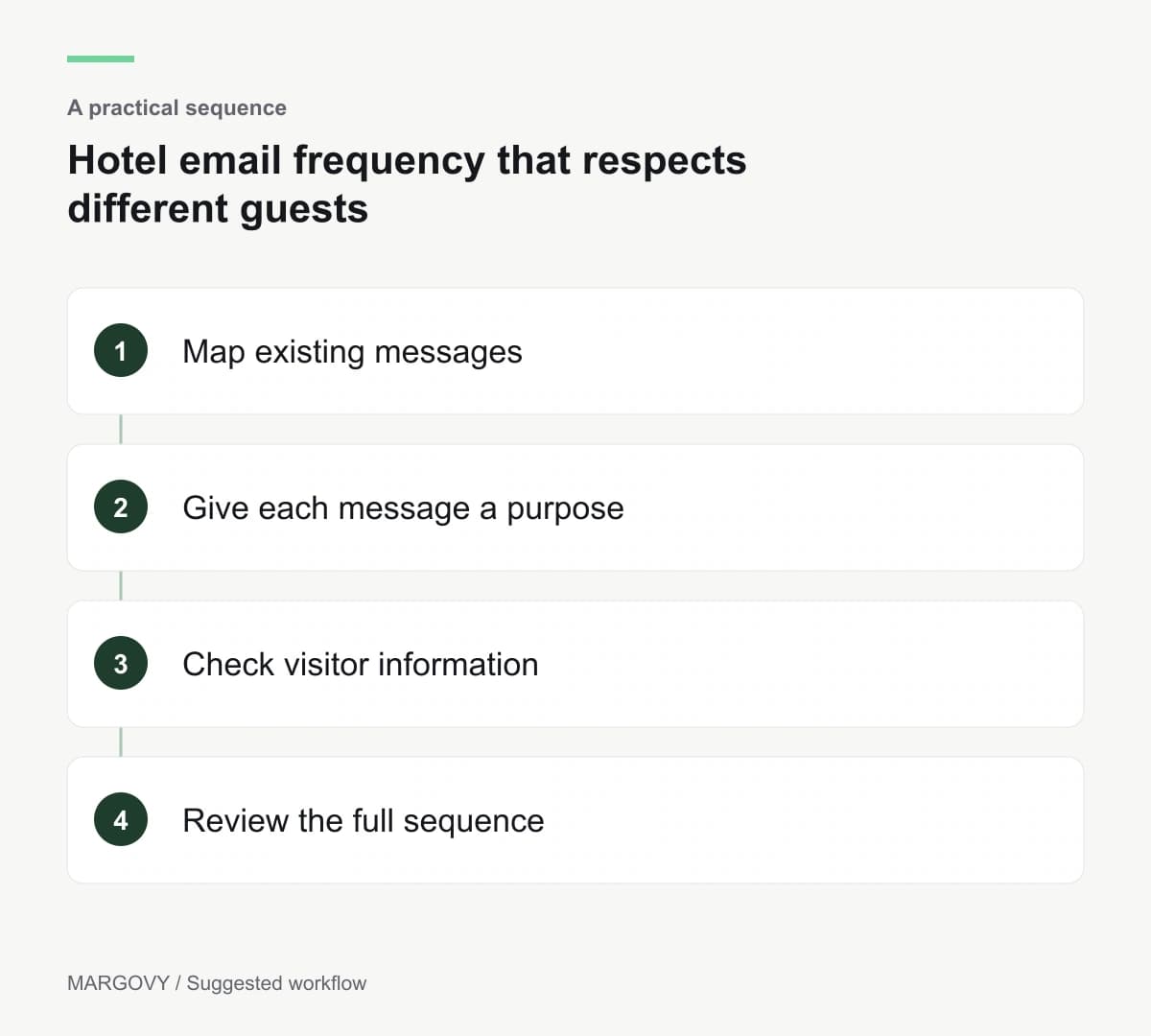
Review the sequence after a normal stay
Use a permitted test arrangement to inspect the messages a guest would receive across the journey. Check duplicated requests and closely spaced sends.
Look at complaints and unsubscribes as well as clicks. A message generating interest can still be poorly timed.
If you change the sequence, record the reason and review it after enough comparable activity. Avoid continually changing every template at once.
Compare Margovy's plans according to the follow-up features you need, rather than the number of messages you could send.